Meringue Magic: Perfect Peaks for Bread Toppings and Soup Swirls
Master meringue: Swiss, French, Italian. Elevate your bread and soup with perfect peaks and textures every time!
Meringue Magic: Perfect Peaks for Bread Toppings and Soup Swirls
Meringue, that ethereal cloud of sweetened egg whites, might seem daunting, but mastering it unlocks a world of possibilities, especially when it comes to elevating your bread and soup creations. Forget dry, cracked peaks; we'll guide you through the secrets to achieving perfect meringue every time, exploring different methods and troubleshooting common pitfalls.
While often associated with desserts, meringue can add a delightful textural contrast to savory dishes. Imagine a toasted meringue topping on a rich onion soup or a delicate meringue swirl adorning a slice of sweet bread.
The Science of Meringue
Meringue is essentially a stable foam created by whipping air into egg whites. This process denatures the proteins in the egg whites, causing them to unfold and form a network that traps air bubbles. Sugar is then added to stabilize the foam and create a glossy, sweet result. The type of sugar, the temperature, and the whipping technique all play crucial roles in the final texture and stability of the meringue.
Understanding these principles is key to avoiding common meringue mishaps.
Three Meringue Methods: A Baker's and Soup Maker's Guide
There are three primary meringue methods: French, Swiss, and Italian. Each method offers a unique texture and level of stability, making them suitable for different applications.
1. French Meringue: The Simplest Approach
French meringue is the most straightforward method, involving whipping raw egg whites with sugar. It's best suited for recipes where the meringue will be cooked, such as baked meringue cookies or as a component in a baked Alaska.
How to Make French Meringue:
-
Ensure your bowl and whisk are impeccably clean and grease-free. Any trace of fat will prevent the egg whites from whipping properly. A stainless steel or glass bowl is ideal.
-
Separate the eggs carefully, ensuring no yolk contaminates the whites. Even a tiny bit of yolk can inhibit the formation of a stable meringue.
-
Begin whipping the egg whites on medium speed until soft peaks form. These peaks will be rounded and droop slightly at the tips.
-
Gradually add granulated sugar, one tablespoon at a time, while continuing to whip. This slow addition is crucial for dissolving the sugar properly and preventing a grainy texture.
-
Increase the speed to high and continue whipping until stiff, glossy peaks form. The peaks should stand straight up and hold their shape.
French Meringue for Bread and Soup:
-
Topping for Sweet Breads: Consider using French meringue as a topping for sweet breads like challah or brioche, baking it until golden brown for a delightful crunch.
-
Meringue Kisses (Baked): Small, baked meringue kisses can be used as a playful garnish for creamy soups, adding a touch of sweetness and contrasting texture.
Tips for Success:
-
Use room-temperature egg whites. They whip up to a greater volume than cold egg whites.
-
Avoid over-whipping, which can result in a dry, crumbly meringue.
-
Bake at a low temperature (around 200°F/95°C) to dry the meringue slowly and prevent cracking.
2. Swiss Meringue: Smooth and Stable
Swiss meringue involves heating egg whites and sugar together over a double boiler before whipping. This process dissolves the sugar completely and partially cooks the egg whites, resulting in a smoother, more stable meringue that's less likely to weep.
How to Make Swiss Meringue:
-
Combine egg whites and sugar in a heatproof bowl (stainless steel or glass). Use a 2:1 ratio of egg whites to sugar by weight.
-
Place the bowl over a simmering pot of water (double boiler), ensuring the bottom of the bowl doesn't touch the water. This gentle heat prevents the egg whites from scrambling.
-
Whisk the egg whites and sugar constantly until the sugar is completely dissolved and the mixture reaches 160°F (71°C). You can test this with a candy thermometer or by rubbing a small amount of the mixture between your fingers – it should feel completely smooth.
-
Remove the bowl from the heat and transfer the mixture to a stand mixer fitted with the whisk attachment.
-
Whip on medium speed until stiff, glossy peaks form and the bowl is cool to the touch. This can take 5-10 minutes.
Swiss Meringue for Bread and Soup:
-
Toasted Meringue Swirls for Soup: Pipe Swiss meringue into decorative swirls on a baking sheet and toast lightly under a broiler for a sophisticated soup garnish. Consider flavoring the meringue with herbs like thyme or rosemary to complement savory soups.
-
Bread Decoration: Use Swiss meringue buttercream (Swiss meringue with butter added) to decorate celebration breads, creating intricate designs.
Tips for Success:
-
Don't overheat the egg whites, as this can cause them to scramble.
-
Ensure the bowl is completely cool before adding any butter if making Swiss meringue buttercream.
-
Swiss meringue is very stable and holds its shape well, making it ideal for piping.
3. Italian Meringue: The King of Stability
Italian meringue is considered the most stable and versatile of the three methods. It involves pouring a hot sugar syrup into whipped egg whites, effectively cooking the egg whites and creating a meringue that can be used in a variety of applications, including uncooked desserts.
How to Make Italian Meringue:
-
Place egg whites in a stand mixer fitted with the whisk attachment.
-
In a saucepan, combine sugar and water (use a 2:1 ratio of sugar to water by weight). Cook over medium heat, stirring until the sugar dissolves.
-
Continue cooking the sugar syrup without stirring until it reaches 245°F (118°C), using a candy thermometer to monitor the temperature. This is the “soft-ball” stage.
-
While the sugar syrup is cooking, begin whipping the egg whites on medium speed until soft peaks form.
-
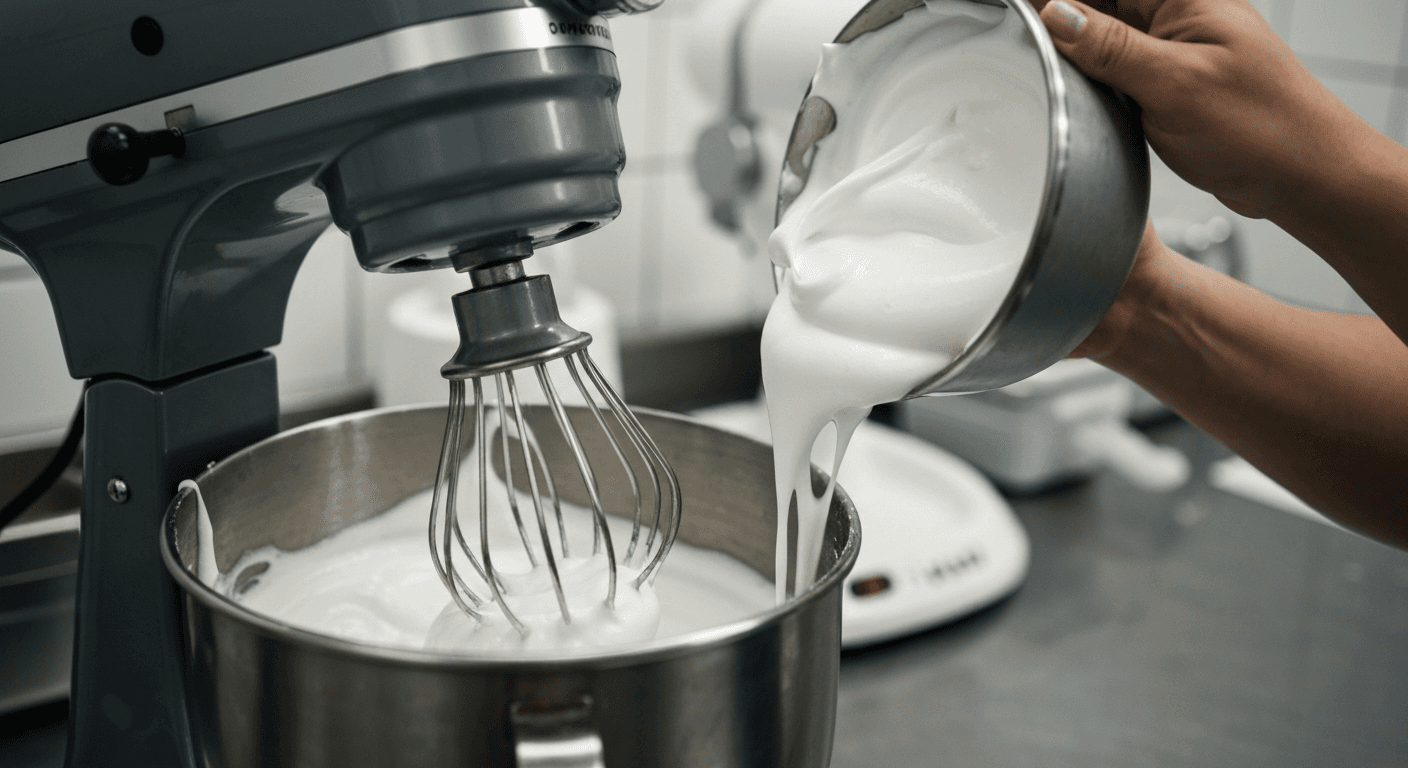
Once the sugar syrup reaches 245°F (118°C), carefully pour it in a thin, steady stream into the whipping egg whites, avoiding the whisk attachment and the sides of the bowl. This slow addition prevents the egg whites from cooking unevenly.
-
Continue whipping on high speed until stiff, glossy peaks form and the bowl is cool to the touch. This can take 5-10 minutes.
Italian Meringue for Bread and Soup:
-
Stabilizer for Bread Dough: A small amount of Italian meringue can be incorporated into enriched bread doughs (like brioche) to add moisture and improve texture. It acts as a natural emulsifier and helps to create a softer crumb.
-
Soup Embellishment: Use a blowtorch to lightly caramelize piped Italian meringue rosettes for an elegant soup garnish. The caramelized sugar adds a depth of flavor and visual appeal.
Tips for Success:
-
Use a candy thermometer to ensure the sugar syrup reaches the correct temperature. Under-cooked syrup will result in a runny meringue, while over-cooked syrup will be hard and brittle.
-
Pour the sugar syrup in a thin, steady stream to avoid cooking the egg whites too quickly.
-
Italian meringue is very stable and can be used to make meringue buttercream, mousse, and other desserts.
Troubleshooting Meringue Mishaps
Even with the best intentions, meringue can sometimes be finicky. Here are some common problems and how to fix them:
-
Meringue won't whip: This is usually due to fat contamination. Ensure your bowl and whisk are impeccably clean and grease-free. Use fresh egg whites.
-
Meringue is grainy: This is often caused by adding the sugar too quickly or not dissolving it completely. Add the sugar gradually and ensure it's fully dissolved before increasing the speed.
-
Meringue is weeping: This means the meringue is releasing liquid. It can be caused by under-whipping, over-baking, or using too much sugar. Ensure you whip the meringue to stiff peaks and bake at a low temperature.
-
Meringue is collapsing: This is often due to over-whipping or not baking it properly. Avoid over-whipping and bake at a low temperature to dry the meringue slowly.
Meringue Beyond Desserts: Savory Applications
While meringue is primarily associated with sweet treats, it can also be used to add a touch of elegance and textural contrast to savory dishes. Think beyond the typical lemon meringue pie and explore these creative applications for your bread and soup creations:
-
Herb-Infused Meringue: Incorporate finely chopped herbs like rosemary, thyme, or chives into your meringue for a savory twist. These herb-infused meringues can be used as a garnish for soups or as a topping for savory breads.
-
Cheese Meringue: Add grated Parmesan or other hard cheeses to your meringue for a cheesy, savory flavor. This type of meringue can be used to top gratins or as a crunchy element in salads.
-
Spiced Meringue: Experiment with spices like smoked paprika, cayenne pepper, or cumin to create a spiced meringue that complements hearty soups and stews.
Elevate Your Bread and Soup with Meringue
Meringue is a versatile and impressive ingredient that can elevate your bread and soup creations to new heights. By understanding the different methods and mastering the techniques, you can create stunning and delicious dishes that will impress your family and friends. So, embrace the meringue magic and let your culinary creativity soar!