Dutch Oven Delights: Baking Bread & Beyond
Unlock your Dutch oven's baking potential! Crusty bread, tender cakes, & flavorful desserts await. Tips, techniques, & recipes inside!
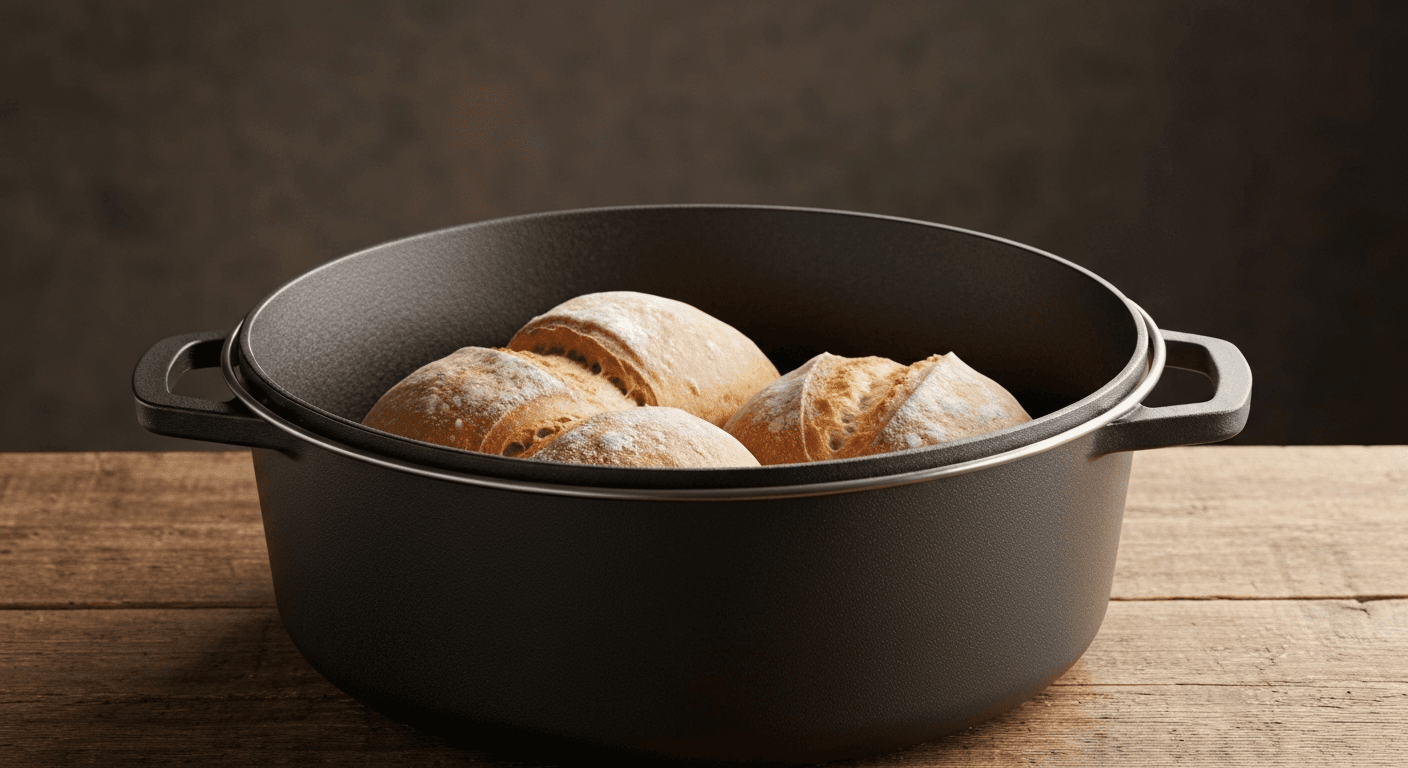
Dutch Oven Delights: Baking Bread & Beyond
The Dutch oven: a kitchen workhorse primarily known for braising and stewing. But its versatility extends far beyond the stovetop. Did you know it's also a phenomenal baking tool? This article will unlock the secrets to baking crusty artisan breads, tender cakes, and flavorful desserts in your Dutch oven. Get ready to expand your culinary horizons!
Why Bake in a Dutch Oven?
What makes a Dutch oven such a great baking vessel? Several key features contribute to its success.
First, its heavy construction and tight-fitting lid create a sealed environment. This traps steam, resulting in a moist interior and a crisp, crackly crust, especially crucial for bread. The even heat distribution of a Dutch oven prevents hot spots, ensuring consistent baking.
Finally, its ability to withstand high temperatures makes it ideal for preheating, mimicking the conditions of a professional bread oven.
Essential Equipment & Considerations
Before you embark on your Dutch oven baking adventure, let's cover the essentials.
- Dutch Oven: A 5-7 quart Dutch oven is ideal. Enameled cast iron is preferred for its ease of cleaning, but bare cast iron works too (ensure it's well-seasoned!). Consider the shape; a round or oval shape is most versatile.
- Parchment Paper: Essential for easy removal and preventing sticking, especially for bread. Pre-cut circles are convenient.
- Oven Mitts/Gloves: Invest in high-quality oven mitts or gloves that protect your hands from the intense heat. Silicone options offer excellent grip and heat resistance.
- Lid Lifter (Optional): A lid lifter can be helpful, especially with heavy lids. However, sturdy oven mitts usually suffice.
- Bench Scraper (for Bread): Useful for shaping and transferring dough.
- Cooling Rack: Allows air to circulate around the baked goods, preventing soggy bottoms.
Consider the size of your oven. A very large Dutch oven might not fit comfortably. Also, be mindful of weight. A fully loaded Dutch oven can be quite heavy, so ensure you can safely lift it in and out of the oven.
Baking Bread: The Ultimate Dutch Oven Loaf
Baking bread in a Dutch oven is a game-changer. The results are consistently impressive: a deeply browned, crackly crust and a soft, airy interior. Here's a step-by-step guide to achieving the perfect loaf.
Step 1: The Dough
Start with a simple no-knead bread recipe. These recipes are forgiving and perfect for beginners. A basic recipe typically includes flour, water, yeast, and salt. Allow ample time for the dough to proof, ideally overnight or for at least 12 hours. This develops flavor and structure.
Here's a basic no-knead recipe:
- 3 cups (384g) all-purpose or bread flour
- 1 1/2 teaspoons salt
- 1/2 teaspoon instant or active dry yeast
- 1 5/8 cups (375g) water, lukewarm
Mix all ingredients in a bowl until just combined. Cover and let rise at room temperature for 12-18 hours.
Step 2: Shaping & Proofing
After the initial proof, gently turn the dough out onto a lightly floured surface. Shape it into a round or oval. Place the shaped dough on a piece of parchment paper. Cover loosely and let it proof for another 30-60 minutes.
Step 3: Preheating
This is crucial! Place your Dutch oven (with the lid on) in the oven and preheat to 450°F (232°C). Ensure your oven is properly preheated before proceeding.
Step 4: Baking
Carefully remove the preheated Dutch oven from the oven. Using the parchment paper as a sling, gently lower the dough into the hot Dutch oven. Cover with the lid.
Bake for 20 minutes with the lid on. Then, remove the lid and bake for another 20-30 minutes, or until the crust is deeply golden brown and the internal temperature reaches 200-210°F (93-99°C).
Step 5: Cooling
Carefully remove the bread from the Dutch oven using the parchment paper. Place it on a cooling rack and let it cool completely before slicing. This is crucial for achieving the best texture.
Common Mistakes & Troubleshooting
- Dense Bread: Insufficient proofing time. Ensure the dough doubles in size during the initial proof.
- Burnt Bottom: Reduce the oven temperature slightly or place a baking sheet on the rack below the Dutch oven.
- Pale Crust: Increase the baking time without the lid or broil briefly at the end (watch carefully!).
- Sticking: Ensure the parchment paper is large enough and properly positioned.
Tips for Bread Baking Success
- Use a digital scale for accurate measurements. This is especially important for bread baking.
- Experiment with different flours. Bread flour yields a chewier texture, while all-purpose flour creates a softer crumb.
- Add herbs, seeds, or cheese to the dough for extra flavor.
- Score the dough before baking to control expansion and create beautiful patterns.
Cakes & Desserts: Sweet Treats from Your Dutch Oven
The Dutch oven isn't just for bread! It's also a fantastic tool for baking cakes, cobblers, and other desserts. The even heat distribution ensures a moist and evenly baked result.
Cakes
Baking cakes in a Dutch oven is similar to baking them in a regular cake pan. Grease and flour the Dutch oven thoroughly to prevent sticking. You can also line the bottom with parchment paper.
Bake at a slightly lower temperature than you would for a regular cake, around 325-350°F (163-177°C), to prevent the edges from browning too quickly. Check for doneness with a toothpick. If the top is browning too much, tent it with foil.
Cobblers & Crisps
Dutch ovens are perfect for cobblers and crisps. The fruit filling bubbles beautifully, and the topping becomes golden brown and crispy. Simply combine your favorite fruit with sugar and spices, top with a biscuit or crumble topping, and bake until bubbly and golden.
Brownies & Blondies
For brownies and blondies, line the Dutch oven with parchment paper, leaving an overhang to easily lift them out. Bake until the edges are set and the center is slightly fudgy. Let them cool completely before cutting into squares.
Dutch Baby Pancake
A Dutch baby pancake, also known as a German pancake, is a puffed-up oven pancake that's perfect for breakfast or brunch. The Dutch oven's heat helps it puff up dramatically. Simply pour the batter into a preheated Dutch oven and bake until golden brown and puffed.
Recipe: Dutch Oven Chocolate Cake
This recipe is a simple yet decadent chocolate cake that's perfect for baking in a Dutch oven.
Ingredients:
- 1 3/4 cups (210g) all-purpose flour
- 2 cups (400g) granulated sugar
- 3/4 cup (75g) unsweetened cocoa powder
- 1 1/2 teaspoons baking powder
- 1 1/2 teaspoons baking soda
- 1 teaspoon salt
- 1 cup (240ml) buttermilk
- 1/2 cup (120ml) vegetable oil
- 2 large eggs
- 2 teaspoons vanilla extract
- 1 cup (240ml) boiling water
Instructions:
- Preheat oven to 350°F (177°C). Grease and flour a 6-quart Dutch oven.
- In a large bowl, whisk together flour, sugar, cocoa powder, baking powder, baking soda, and salt.
- In a separate bowl, combine buttermilk, oil, eggs, and vanilla extract. Add to dry ingredients and mix until just combined.
- Gradually add boiling water and stir until batter is smooth (batter will be thin).
- Pour batter into prepared Dutch oven.
- Bake for 30-35 minutes, or until a toothpick inserted into the center comes out with a few moist crumbs.
- Let cool in Dutch oven for 10 minutes before inverting onto a wire rack to cool completely.
Heat Control: Mastering the Oven Temperature
Consistent heat is key to successful Dutch oven baking. Here are some tips for maintaining the ideal temperature:
- Oven Thermometer: Use an oven thermometer to ensure your oven is accurate. Oven temperatures can vary, so it's essential to know the actual temperature.
- Preheating: Allow ample time for the Dutch oven to preheat fully. This ensures even heat distribution.
- Adjusting Temperature: If the edges of your baked goods are browning too quickly, reduce the oven temperature slightly.
- Tenting with Foil: If the top of your baked goods is browning too quickly, tent it with foil.
- Rack Placement: Place the Dutch oven in the center of the oven for even heat distribution.
Caring for Your Dutch Oven
Proper care will ensure your Dutch oven lasts for generations. Here are some tips:
- Cleaning: For enameled cast iron, wash with warm, soapy water. Avoid using abrasive cleaners or scouring pads. For bare cast iron, season regularly with oil after each use.
- Storage: Store your Dutch oven in a dry place. Place a paper towel or cloth between the lid and the pot to allow air circulation.
- Rust Prevention: For bare cast iron, prevent rust by ensuring it's completely dry before storing and regularly seasoning it with oil.
Conclusion
The Dutch oven is a versatile baking tool that can elevate your bread, cakes, and desserts. With its ability to trap steam, distribute heat evenly, and withstand high temperatures, it creates the perfect environment for baking. So, dust off your Dutch oven and embark on a baking adventure. You'll be amazed at the delicious results!