Deboning a Duck: A Pro's Guide to Maximizing Flavor & Saving Money
Master the art of deboning a duck! Unlock richer flavor, save money, and impress your guests. Step-by-step guide included.
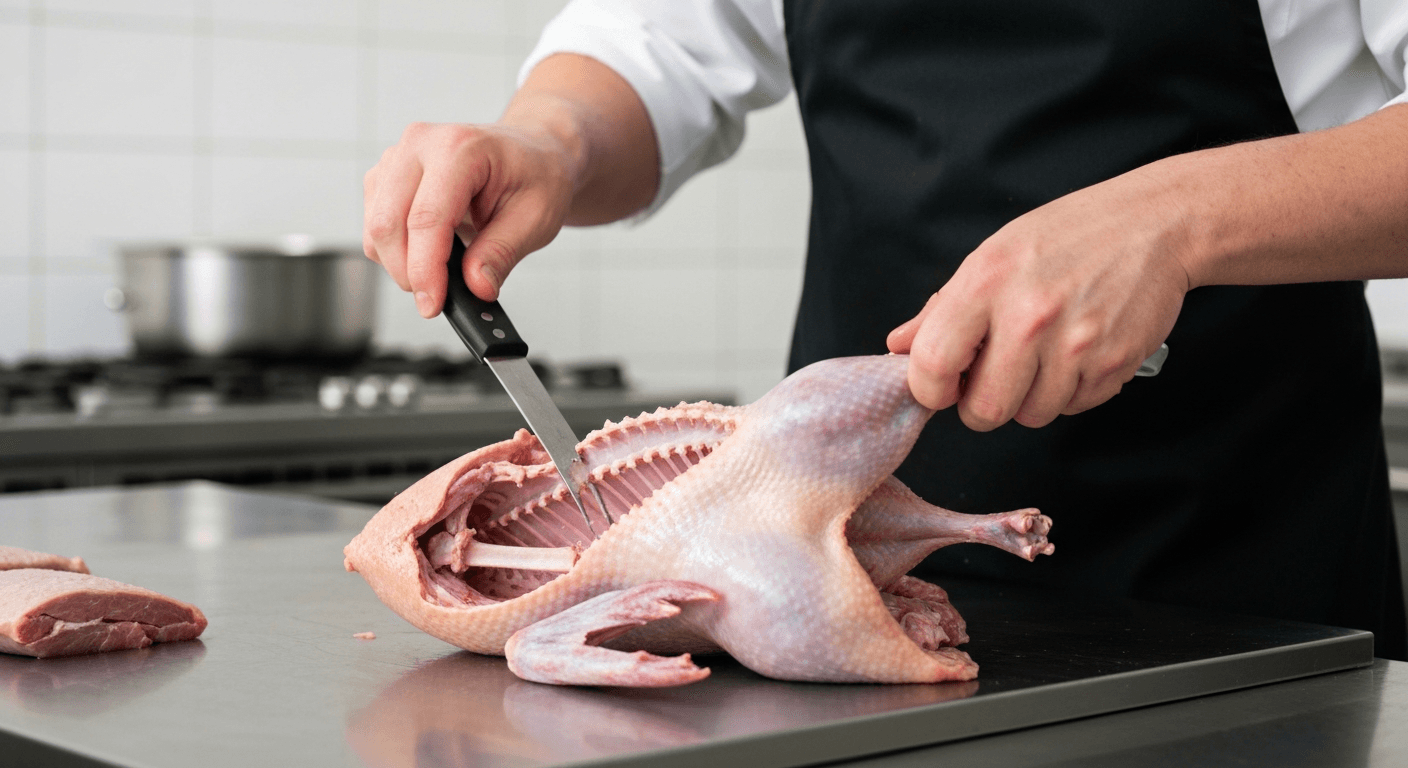
Deboning a duck might seem intimidating, but it's a surprisingly rewarding skill. Not only will you save money compared to buying pre-cut duck, but you'll also unlock a world of culinary possibilities. The bones become the foundation for a rich, flavorful stock, while the rendered fat is liquid gold for confit and other delicious dishes. Plus, a properly deboned duck cooks more evenly and is easier to carve.
This comprehensive guide will walk you through each step, transforming you from a novice to a confident duck deboner. We'll cover everything from preparing your workspace to rendering the fat and utilizing the bones for stock. Let's get started!
Why Debone a Duck?
Before we dive in, let's quickly recap the benefits of deboning a duck yourself:
-
Cost Savings: Whole ducks are typically cheaper per pound than pre-cut portions.
-
Flavor Maximization: The bones create a superior stock, and the rendered fat adds incredible richness to other dishes.
-
Even Cooking: A deboned duck cooks more evenly, preventing the breast from drying out before the legs are cooked through.
-
Elegant Presentation: A deboned and stuffed duck is a show-stopping centerpiece for any meal.
-
Reduced Carving Difficulty: Carving a deboned duck is significantly easier than wrestling with bones at the table.
Essential Equipment
Having the right tools makes all the difference. Here's what you'll need:
-
Sharp Boning Knife: A flexible boning knife is crucial for navigating around the bones. A 6-inch blade is a good starting point.
-
Chef's Knife: For separating the legs and wings.
-
Kitchen Shears: Helpful for trimming excess skin and cartilage.
-
Cutting Board: A large, sturdy cutting board is essential.
-
Bowl: For collecting the bones and scraps.
-
Container: To store the rendered duck fat.
-
Paper Towels: For keeping your hands and workspace clean.
Tip: Ensure your knives are sharp! A dull knife is more dangerous than a sharp one.
Preparing the Duck
Before you start deboning, there are a few preparatory steps:
-
Thaw the Duck: If your duck is frozen, thaw it completely in the refrigerator for 24-48 hours. Never thaw at room temperature.
-
Remove Giblets and Neck: These are usually found inside the cavity of the duck. Save them for stock!
-
Pat the Duck Dry: Use paper towels to thoroughly dry the duck, both inside and out. This will help the skin crisp up during cooking.
-
Trim Excess Fat: Trim any large pockets of fat around the cavity opening. Don't discard it! This will be rendered later.
Common Mistake: Skipping the drying step. Moisture is the enemy of crispy skin.
Step-by-Step Deboning Guide
Now for the main event! Follow these steps carefully:
-
Remove the Legs: Place the duck breast-side up on the cutting board. Locate the joint where the leg connects to the body. Use your chef's knife to cut through the skin and meat around the joint. Bend the leg back to pop the joint out of its socket. Continue cutting through the remaining tendons and ligaments to completely detach the leg. Repeat on the other side.
-
Remove the Wings: Similar to the legs, locate the wing joint. Cut through the skin and meat, bend the wing back, and detach it from the body. Repeat on the other side. You can choose to leave the wing tips attached to the carcass for stock, or remove them and save them for another use.
-
Debone the Back: Turn the duck so the backbone is facing up. Using your boning knife, make a shallow cut along the entire length of the backbone, from neck to tail.
-
Separate the Meat from the Rib Cage: Carefully use your boning knife to separate the meat from the rib cage. Work slowly and methodically, using short, controlled strokes. Keep the knife close to the bone to avoid wasting meat. The goal is to detach the entire rib cage from the breast meat in one piece.
-
Remove the Wishbone: Locate the wishbone at the neck end of the duck. Use the tip of your boning knife to carefully cut around the wishbone and remove it. This will make carving easier later on.
-
Continue Deboning: Continue working your way around the rib cage, using your fingers to gently pull the meat away from the bone as you cut. Be careful not to puncture the skin.
-
Remove the Thigh Bones: Once you've reached the thigh bones, use your boning knife to carefully cut around them and remove them from the legs.
-
Final Touches: Once the entire carcass is removed, inspect the duck for any remaining bones or cartilage. Remove them with your knife or kitchen shears.
Tip: Don't be afraid to use your fingers to help separate the meat from the bones. It's often easier to feel where the knife needs to go.
Common Mistake: Rushing the process. Take your time and be patient. It's better to go slowly and carefully than to make mistakes and waste meat.
Rendering Duck Fat
Now that you've deboned the duck, it's time to render the fat. This is a simple process that yields a flavorful and versatile cooking fat.
-
Cut the Fat into Small Pieces: Cut the reserved duck fat into small, even pieces. This will help it render more quickly and evenly.
-
Place the Fat in a Heavy-Bottomed Pot: Place the fat in a heavy-bottomed pot or Dutch oven.
-
Add a Little Water: Add about 1/4 cup of water to the pot. This will prevent the fat from burning at the beginning of the rendering process.
-
Cook Over Low Heat: Cook the fat over low heat, stirring occasionally, until it has completely rendered and the cracklings are golden brown and crispy. This can take several hours.
-
Strain the Fat: Strain the rendered fat through a fine-mesh sieve lined with cheesecloth to remove any impurities.
-
Store the Fat: Store the rendered duck fat in an airtight container in the refrigerator. It will keep for several weeks.
Tip: Don't discard the cracklings! They are delicious as a snack or sprinkled over salads.
Common Mistake: Cooking the fat over too high heat. This will cause it to burn and develop a bitter flavor.
Making Duck Stock
Don't let those bones go to waste! They are the foundation for a rich and flavorful duck stock.
-
Roast the Bones (Optional): For a richer, more complex flavor, roast the duck bones in a preheated oven at 400°F (200°C) for 30-45 minutes, or until they are golden brown.
-
Place the Bones in a Large Pot: Place the roasted (or unroasted) duck bones in a large pot.
-
Add Aromatics: Add aromatics such as onions, carrots, celery, garlic, and herbs to the pot.
-
Cover with Water: Cover the bones and aromatics with cold water.
-
Bring to a Simmer: Bring the water to a simmer over medium heat. Reduce the heat to low and simmer gently for at least 4 hours, or up to 8 hours.
-
Skim the Surface: Skim off any foam or impurities that rise to the surface during simmering.
-
Strain the Stock: Strain the stock through a fine-mesh sieve lined with cheesecloth.
-
Cool and Store: Cool the stock completely before storing it in the refrigerator or freezer.
Tip: For a more intense flavor, reduce the stock by simmering it uncovered until it reaches your desired consistency.
Common Mistake: Boiling the stock. This will make it cloudy and bitter.
Cooking the Deboned Duck
Now that you've deboned the duck, rendered the fat, and made stock, it's time to cook the duck! Here are a few ideas:
-
Roast Duck: Spread the duck out flat, skin-side up, on a roasting rack. Season generously with salt and pepper. Roast in a preheated oven at 375°F (190°C) for 1-1.5 hours, or until the skin is crispy and the internal temperature reaches 165°F (74°C).
-
Duck Confit: Cure the duck legs in salt, garlic, and herbs for 24 hours. Rinse off the cure and submerge the legs in rendered duck fat. Cook in a low oven (275°F/135°C) for several hours, until the meat is fork-tender.
-
Stuffed Duck: Stuff the deboned duck with your favorite filling, such as rice, sausage, or vegetables. Sew up the opening with kitchen twine and roast as described above.
Tips for Crispy Skin
Achieving crispy duck skin is the ultimate goal. Here are a few tips to help you succeed:
-
Dry the Duck Thoroughly: As mentioned earlier, moisture is the enemy of crispy skin. Pat the duck dry, both inside and out, before cooking.
-
Score the Skin: Use a sharp knife to score the skin in a crosshatch pattern. This will help the fat render out and the skin crisp up. Be careful not to cut into the meat.
-
Prick the Skin: Use a fork or skewer to prick the skin all over. This will also help the fat render out.
-
Use a High Oven Temperature: Start cooking the duck at a high oven temperature (425°F/220°C) for the first 15-20 minutes to help the skin crisp up. Then, reduce the temperature to 375°F (190°C) for the remainder of the cooking time.
-
Baste with Rendered Fat: Baste the duck with rendered duck fat every 15-20 minutes during cooking. This will help keep the skin moist and promote browning.
-
Rest the Duck: Let the duck rest for at least 15 minutes before carving. This will allow the juices to redistribute and the meat to become more tender.
Conclusion
Deboning a duck is a valuable skill that will elevate your cooking and save you money. With practice and patience, you'll be able to transform a whole duck into a variety of delicious dishes. So, grab your boning knife and get started! You'll be amazed at the results.