Beyond Slicing: Mastering Essential Vegetable Butchery Techniques
Elevate your cooking! Learn advanced vegetable cutting techniques for stunning dishes and maximum yield.
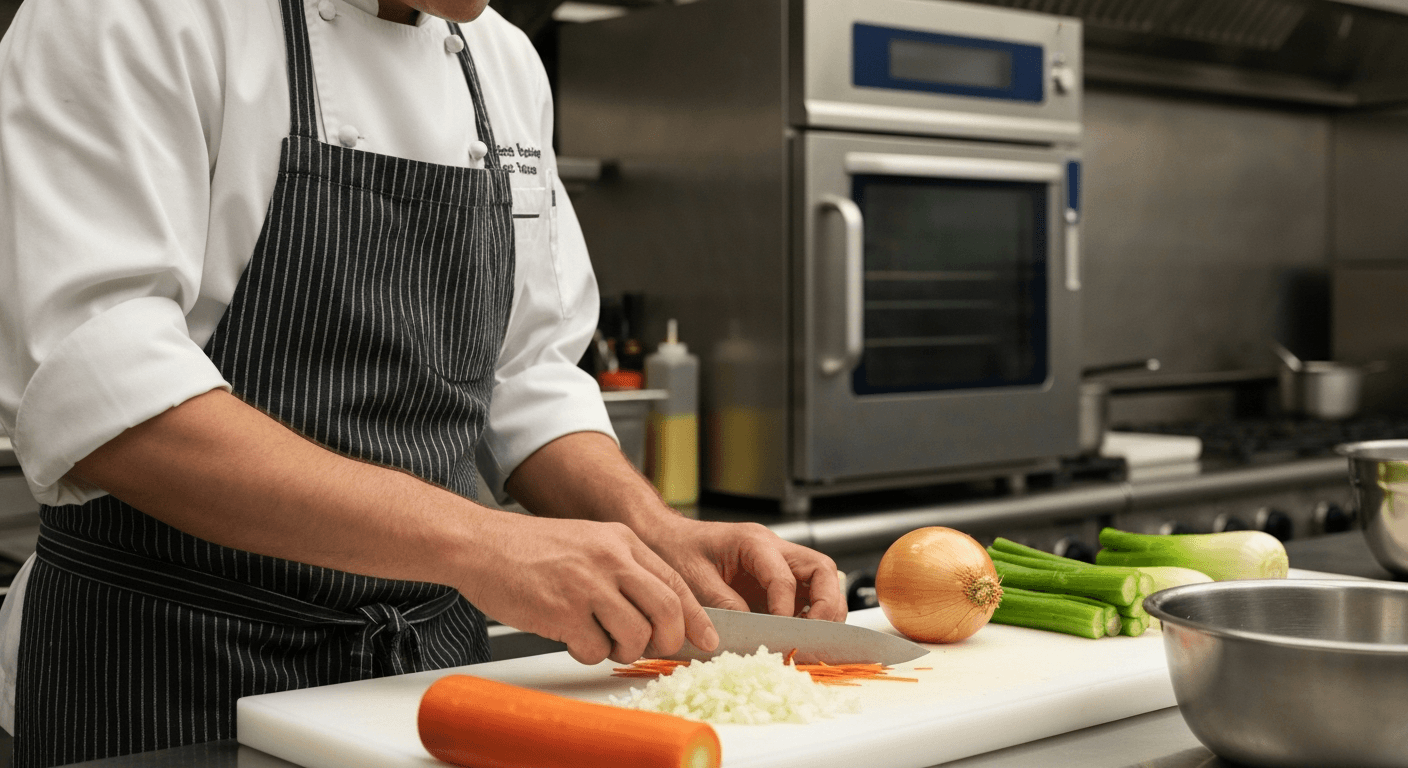
Vegetable butchery goes far beyond simple slicing and dicing. Mastering essential techniques like tourné, brunoise, and julienne not only enhances the visual appeal of your dishes but also ensures even cooking and maximizes yield. This guide will take you through these advanced techniques, providing step-by-step instructions and practical tips to elevate your culinary skills.
Why Master Vegetable Butchery?
While basic knife skills are essential, delving into more advanced vegetable butchery offers several advantages.
- Aesthetics: Precise cuts create visually appealing dishes, elevating the dining experience.
- Even Cooking: Uniformly sized vegetables cook at the same rate, preventing some pieces from being overcooked while others remain undercooked.
- Texture: Different cuts can alter the texture of vegetables, adding another layer of complexity to your dishes.
- Yield Maximization: Proper butchery techniques minimize waste, allowing you to get the most out of your produce.
Essential Knife Skills Refresher
Before tackling advanced techniques, ensure you have a solid foundation in basic knife skills. This includes:
- Proper Knife Grip: Use a pinch grip, holding the knife with your thumb and forefinger on the blade, just above the bolster.
- Knife Safety: Always curl your non-dominant hand's fingers inward to protect them. Keep your eyes on the blade and maintain a steady, controlled motion.
- Rocking Motion: Utilize a rocking motion for efficient chopping, keeping the tip of the knife on the cutting board.
- Maintaining a Sharp Knife: A sharp knife is a safe knife. Invest in a honing steel and learn how to use it regularly.
The Tourné (Turning)
The tourné, also known as turning, is a classic French technique that transforms vegetables into elegant, barrel-shaped pieces. This technique is primarily used for root vegetables like potatoes, carrots, and parsnips.
Why Tourné?
- Elegant Presentation: Tourné vegetables add a touch of sophistication to any dish.
- Even Cooking: The uniform shape promotes even cooking.
- Reduced Waste (Potentially): Though it creates scraps, skilled practice can minimize waste.
Step-by-Step Guide to Tourné:
-
Peel the Vegetable: Start by peeling the vegetable you'll be turning.
-
Trim the Ends: Trim both ends of the vegetable to create flat surfaces.
-
Create the Initial Shape: Using a paring knife, create the basic barrel shape by removing the corners and edges.
-
Form the Seven Sides: Rotate the vegetable and use your paring knife to create seven evenly spaced sides. Each cut should be slightly curved, following the barrel shape.
-
Refine the Shape: Continue refining the shape by smoothing out any rough edges and ensuring all sides are uniform.
Common Mistakes:
- Uneven Sides: Ensure each side is the same size and shape.
- Cutting Too Deep: Avoid cutting too deeply, which can waste the vegetable.
- Using a Dull Knife: A sharp paring knife is essential for precise cuts.
Tips for Success:
- Practice Makes Perfect: Tourné requires practice to master. Don't be discouraged if your first attempts aren't perfect.
- Use a Sharp Paring Knife: A sharp knife will make the process much easier and safer.
- Start with Larger Vegetables: Larger vegetables are easier to handle and turn.
The Brunoise
The brunoise is a very small dice, typically measuring 1/8 inch by 1/8 inch by 1/8 inch. This technique is often used for aromatic vegetables like onions, carrots, and celery, adding subtle flavor and texture to sauces, soups, and garnishes.
Why Brunoise?
- Fine Texture: The small dice melts into sauces and soups, adding flavor without overpowering the dish.
- Elegant Garnishes: Brunoise vegetables can be used as a delicate garnish, adding a pop of color and flavor.
Step-by-Step Guide to Brunoise:
-
Create a Rectangle: Trim the vegetable into a rectangular shape.
-
Slice into Thin Planks: Slice the rectangle into thin planks, about 1/8 inch thick.
-
Stack the Planks: Stack the planks on top of each other.
-
Cut into Thin Strips (Julienne): Cut the stacked planks into thin strips, about 1/8 inch wide. This creates a julienne cut.
-
Dice the Julienne: Gather the julienned strips and dice them crosswise into small cubes, about 1/8 inch in size. This creates the brunoise.
Common Mistakes:
- Inconsistent Dice: Ensure all the cubes are the same size for even cooking and a uniform appearance.
- Rushing the Process: Take your time to ensure precise cuts.
- Using a Dull Knife: A sharp knife is crucial for clean cuts.
Tips for Success:
- Practice Your Julienne: Mastering the julienne cut is essential for creating a perfect brunoise.
- Keep Your Knife Sharp: A sharp knife will make the process much easier and safer.
- Use a Cutting Board with Measurements: A cutting board with measurements can help you achieve consistent dice sizes.
The Julienne
The julienne is a long, thin, matchstick-like cut, typically measuring 1/8 inch by 1/8 inch by 1-2 inches. This technique is used for a variety of vegetables, adding texture and visual appeal to salads, stir-fries, and other dishes.
Why Julienne?
- Elegant Presentation: Julienne vegetables add a touch of sophistication to any dish.
- Even Cooking: The uniform shape promotes even cooking, especially in stir-fries.
- Versatile Application: Julienne vegetables can be used in a wide range of dishes.
Step-by-Step Guide to Julienne:
-
Create a Rectangle: Trim the vegetable into a rectangular shape.
-
Slice into Thin Planks: Slice the rectangle into thin planks, about 1/8 inch thick.
-
Stack the Planks: Stack the planks on top of each other.
-
Cut into Thin Strips: Cut the stacked planks into thin strips, about 1/8 inch wide and 1-2 inches long. This creates the julienne cut.
Common Mistakes:
- Inconsistent Strips: Ensure all the strips are the same size and shape.
- Cutting Too Thick: The strips should be thin and delicate.
- Using a Dull Knife: A sharp knife is crucial for clean cuts.
Tips for Success:
- Use a Ruler: A ruler can help you achieve consistent strip lengths.
- Practice Makes Perfect: Julienne requires practice to master. Don't be discouraged if your first attempts aren't perfect.
- Keep Your Knife Sharp: A sharp knife will make the process much easier and safer.
Other Notable Vegetable Cuts
Beyond the tourné, brunoise, and julienne, several other vegetable cuts are worth exploring:
- Dice: A cube-shaped cut, typically larger than a brunoise. Common sizes include small dice (1/4 inch), medium dice (1/2 inch), and large dice (3/4 inch).
- Mince: A very fine chop, often used for garlic, ginger, and herbs.
- Chiffonade: Thinly sliced ribbons of leafy greens, such as basil or spinach.
- Paysanne: A flat, square, or triangular cut, typically about 1/2 inch in size and 1/8 inch thick.
- Rondelle: A round slice, often used for carrots, cucumbers, and zucchini.
Maximizing Yield and Minimizing Waste
Effective vegetable butchery is not only about creating beautiful cuts but also about maximizing yield and minimizing waste. Here are some tips:
-
Use Vegetable Scraps: Save vegetable scraps like peels, stems, and ends to make vegetable stock.
-
Compost: Compost any remaining vegetable waste to reduce your environmental impact.
-
Plan Your Cuts: Before you start cutting, plan how you will use each part of the vegetable.
-
Sharpen Your Knives Regularly: A sharp knife will help you make clean cuts and reduce waste.
-
Store Vegetables Properly: Proper storage will extend the shelf life of your vegetables, reducing the likelihood of spoilage.
Conclusion
Mastering essential vegetable butchery techniques can significantly enhance your culinary skills. By practicing these techniques, you'll be able to create visually appealing dishes with even cooking and maximized yield. So, grab your knives, sharpen your skills, and start exploring the art of vegetable butchery!